
Introduction
Dental crowns are custom-made covers placed over damaged teeth. They help restore strength and function to teeth that are weak, cracked, or worn down. Often, dental crowns are used in tooth restoration to protect and improve the look of your smile. Because they fit over your natural tooth, crowns can help you chew and speak with ease. In this blog, you will learn about dental crowns, their types, the dental crown procedure, and how to care for dental crowns.
What Are Dental Crowns?
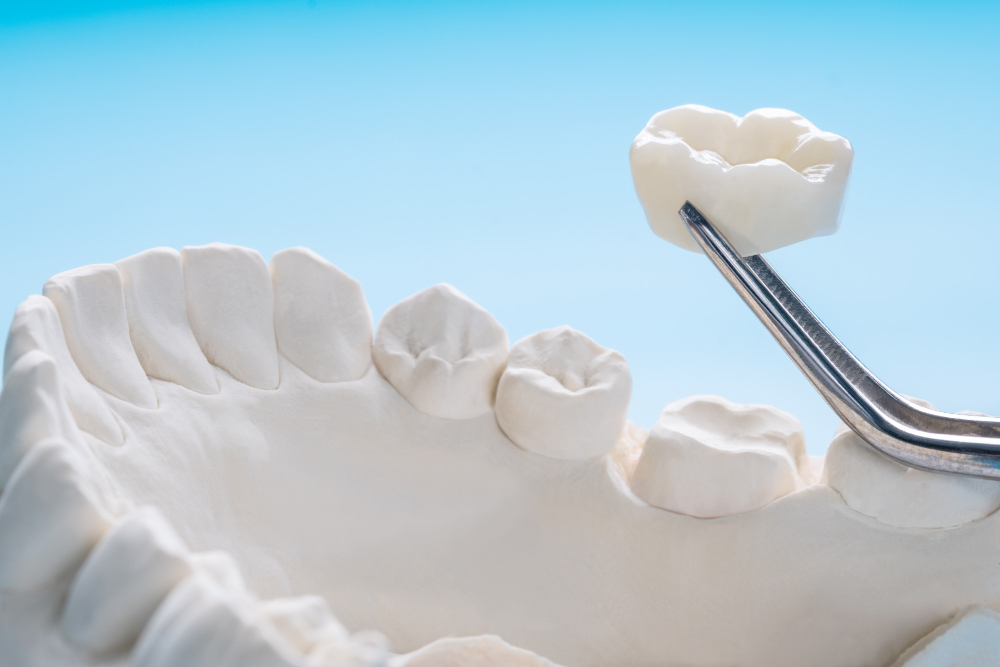
Dental crowns are tooth-shaped caps. Dentists place them over teeth that are broken, weak, or misshapen. For example, if a tooth is too damaged for a simple filling, a crown can help. Crowns cover the entire visible part of the tooth above the gum line. As a result, they restore the tooth’s shape, size, and strength. Crowns also improve how your tooth looks and works.
When Are Dental Crowns Needed?
Sometimes, teeth need extra support. Dental crowns are often needed in these situations:
In many cases, your dentist will suggest a crown if other treatments are not enough. For children, crowns may be used to save a tooth that cannot support a filling.
Types of Dental Crowns
There are several types of dental crowns. Each type has its own benefits. Your dentist will help you choose the best one for your needs. Common types include:
Because each type has pros and cons, it is important to discuss your options with your dentist.
The Dental Crown Procedure: Step-by-Step
Getting a dental crown usually takes two visits. Here is what you can expect:
Some dental offices offer same-day crowns using special machines. However, most crowns are made in a dental lab.
Benefits of Dental Crowns
Dental crowns offer many benefits. For example, they:
Because crowns cover the whole tooth, they also help prevent further damage.
Risks and Considerations
While dental crowns are safe, there are some risks to consider. For instance, you may feel sensitivity after the procedure. Sometimes, the crown can become loose or fall off. Rarely, you may have an allergic reaction to the materials. In addition, crowns can chip or wear down over time. However, most problems are easy to fix. Always tell your dentist if you notice pain or changes in your crown.
Caring for Your Dental Crown
Proper care helps your dental crown last longer. Here are some tips:
With good care, dental crowns can last 5 to 15 years or more.
Frequently Asked Questions
For more information, you can visit trusted sources like the American Dental Association or the CDC.
Conclusion
Dental crowns are a strong solution for restoring damaged teeth. They help you eat, speak, and smile with confidence. If you think you need a dental crown, consult Dr. Neethi Reddy to find out if a dental crown is right for you.